Countering Xenophobia: Why We Need to #STOPEACOP
We recognise that rising xenophobia, and specifically Afrophobia, scapegoats migrants while distracting us from the real causes of inequality: colonialism, resource extraction, austerity and economic systems that continue to enrich a powerful few at the expense of millions.
To understand migration today, we must pay attention to what is regionally and how it creates knock-on effects. Across Africa, communities are being displaced not only by conflict and climate change, but also by large-scale extractive projects that prioritise corporate profits over people and nature.
Today we look at the East African Crude Oil Pipeline (EACOP). While EACOP is not yet operational, it – and so many major extractive developments like it – remind us that migration does not happen in isolation.
Did you know…
The East African Crude Oil Pipeline (EACOP) is set to become the world’s longest heated crude oil pipeline. The pipeline will stretch approximately 1,443 kilometres from Hoima in western Uganda to the Port of Tanga in Tanzania. It is being developed to transport crude oil from Uganda’s Lake Albert oilfields to the Indian Ocean for export.
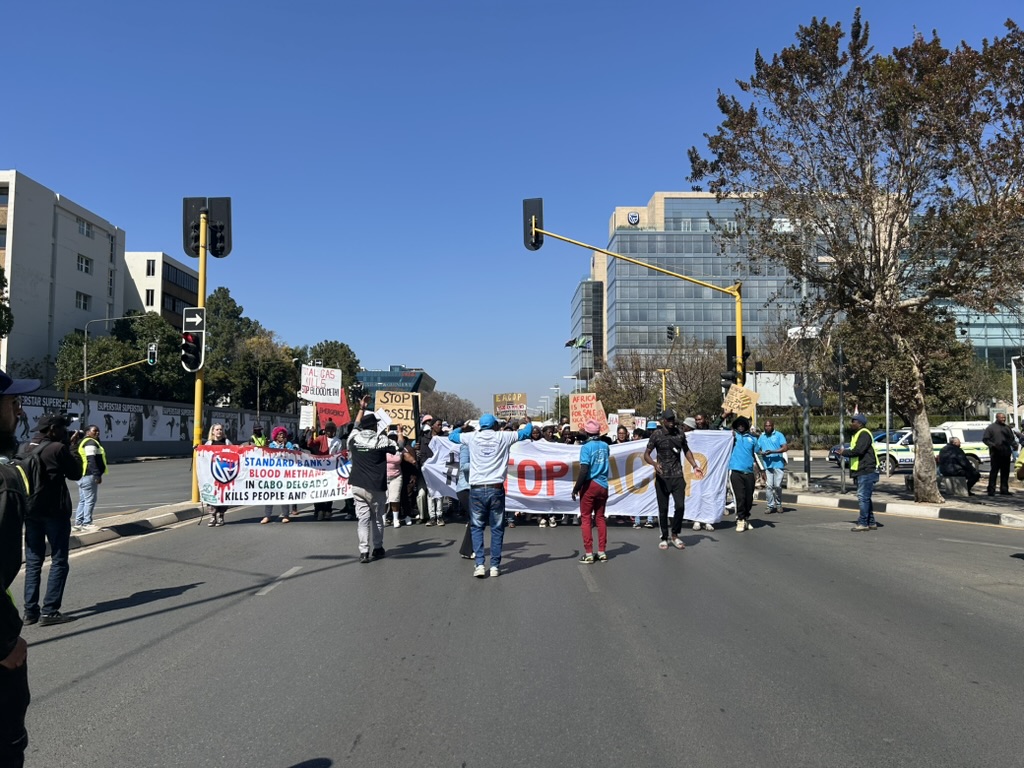
The project is led by TotalEnergies (France) and the China National Offshore Oil Corporation (CNOOC), together with the national oil companies of Uganda and Tanzania. Despite years of public opposition, financing has continued through project shareholders and a small number of financial institutions. This, after many international banks and insurers withdrew because of significant environmental, climate and human rights concerns. Among the banks that have remained involved is South Africa’s Standard Bank, along with regional and international financiers. Supporters argue that EACOP will bring investment and economic growth. But communities, environmental organisations and human rights groups tell a different story.
The pipeline cuts across hundreds of villages in Uganda and Tanzania, requiring land acquisition and a major disruption of livelihoods. Activists estimate that over 118 000 people have been affected through land acquisition, loss of livelihoods or displacement. Many others have reported delayed or inadequate compensation.
EACOP also threatens some of East Africa’s most important ecosystems. The pipeline passes through the Lake Victoria basin. The Lake Victoria basin provides water and livelihoods for over 40 million people, and traverses wetlands, forests and biodiversity hotspots which support elephants, lions, chimpanzees and countless other species. Environmental groups warn that oil spills, habitat fragmentation and ecosystem degradation could have devastating long-term consequences. Beyond its local impacts, EACOP represents a major climate threat.
Once operational, the project will enable emissions of hundreds of millions of tonnes of carbon dioxide over its lifetime. This will lock East Africa into decades of new fossil fuel production. This, at a time when the world urgently needs a just transition away from oil, gas and coal.
Migration does not happen in isolation
When communities lose their land, livelihoods, water sources and ecosystems to extractive projects, while many others are forced to move. Large-scale fossil fuel developments like EACOP indicate how resource extraction can deepen inequality, accelerate climate change and contribute to displacement across the continent. We must confront the systems that continue to prioritise profit and extraction over people, biodiversity and a liveable planet. The answer is not in blaming migrants or scapegoating, it is in solidarity.
This story is part of a series countering xenophobia and Afrophobia in South Africa. Each post explores how South Africa’s history and present-day political and economic relationships with countries across the continent have shaped migration, energy systems, resource extraction and inequality. By understanding these shared histories, we can challenge the myths that blame migrants for crises they did not create.
Migration is not the problem. Colonialism, exploitation, inequality and climate injustice are. Stay tuned for the next story in the series as we continue to unpack the histories that connect us across Africa. Siyafana Sonke, We are one.