Lessons from a Community Mapping and Organising Visit to North West
Between 12 and 14 August 2026, CJC organiser Cleopatra Shezi travelled through Marikana, Klerksdorp, Ikageng and Potchefstroom, meeting with community members and activists in the North West. Cleo heard stories of struggle, resilience and organising. Each community faces its own unique challenges, with a common one amongst them all: people are living alongside industries and infrastructure that generate wealth and power, yet they continue to be denied access to basic services, decent jobs and a healthy environment.
Paying the price of mining without sharing in its fruits
In Marikana, young people spoke openly about the realities of unemployment, limited educational opportunities, and the rising cost of living.
Many residents live in mining-owned accommodation, paying around R1,500 a month in rent with electricity costs climbing up to as much as R2,500 during winter.
Community members also raised concerns about the quality of their drinking water. Residents living near Shaft 18 believe the water they rely on may be unsafe, yet many have little choice but to continue using it.
Perhaps most frustrating is the feeling of exclusion. Despite living alongside mining operations, residents say mines often recruit workers from outside the area, leaving local communities trapped in cycles of unemployment and poverty.
Communities continue to bear the environmental and social costs of mining while being excluded from its economic benefits.
Water, dust and daily survival
In Klerksdorp, community members had similar concerns.
Water shortages have become part of everyday life. During Cleo’s visit, access to water was so limited that even flushing a toilet became a challenge. Community members also spoke about rising electricity tariffs and the financial pressure this places on already struggling households.
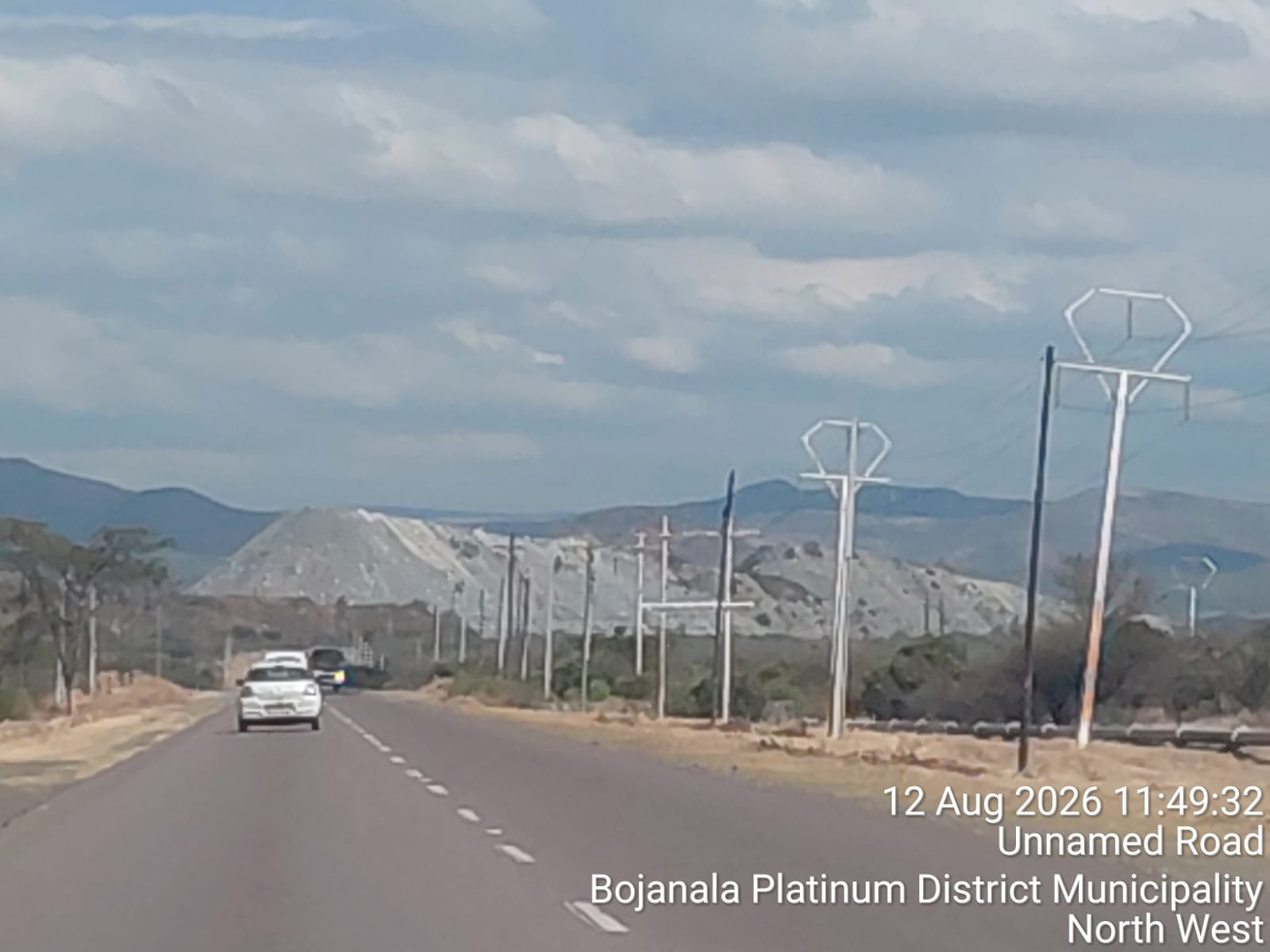
Health and environmental concerns were also evident. Dust pollution affects Cleo’s breathing on the trip, leading her to wonder how communities live in such conditions. Community members are uncertain whether the dust comes from nearby grey ash deposits or seasonal conditions, but the impacts are real and immediate.
For people living in these communities, injustice is felt with every breath, every water shortage, and every additional cost imposed on already stretched households.
A community without electricity next to a power station
The following day, organisers visited Ikageng, an informal settlement near Potchefstroom.
Residents described what it means to live without electricity, reliable infrastructure, or secure access to water.
When community members approach the municipality or Eskom about electrification, they are told the settlement is situated on dolomitic land and is therefore unsuitable for permanent settlement. Yet no meaningful alternatives are offered.
The roads are untarred and become almost impassable when it rains. School transport often cannot reach children, disrupting access to education and creating additional challenges for families. The community taps, which are supposed to provide the entire community with water, are unreliable.
But perhaps the most striking reality is that a power station stands nearby.
The power station supplies electricity to surrounding communities, while many households in the neighbouring informal settlements, which house mainly Black and working-class folks, remain without access to electricity.
For residents, this feels like a clear example of energy injustice and energy racism. They live alongside energy infrastructure, yet remain excluded from the benefits it provides.
Connecting everyday struggles to a just transition
On 14 August, approximately 79 community members from Ikageng and surrounding wards gathered for a Climate Justice Coalition workshop on Green New Eskom and green industrialisation.
The workshop created space for communities to connect their everyday struggles with CJC campaigns and broader conversations about energy, jobs, health, housing and climate justice.
One discussion focused on the grey ash dumps that surround many communities in the area. Participants explained that they had never been properly informed about what these ash deposits are or the potential health impacts associated with them.
Many residents spoke about illness in their communities but had never been given the information needed to understand the possible environmental causes.
The workshop also sparked important conversations about energy alternatives.
For many participants, renewable energy is associated with expensive solar panels that are out of reach for poor households. Discussions explored how public investment, democratic ownership and community-centred planning could make renewable energy more accessible and affordable.
Participants also learned about alternative forms of energy generation and began imagining what a people-centred energy system could look like.
We see how a just transition cannot simply replace one form of energy with another. It must address inequality, affordability, and access.
Communities are organising
Despite the challenges, the visit was also a reminder of the power of collective organising.
Community members spoke about continuing the work and vision of the late Comrade Mokoena, who fought for the rights of informal settlement residents across the province.
Local organisers shared plans to establish committees focused on unemployment, housing, health, water and sanitation, labour rights and community education. They also discussed creating advice centres where residents can share knowledge, support one another and build collective power.
Participants repeatedly emphasised the need for political education that is accessible and available in local languages. Many called for CJC materials to be translated into isiZulu, Sesotho and isiXhosa so that more people can participate in discussions about climate justice, energy democracy and community rights.
Building power from the ground up
In Marikana, Klerksdorp, Ikageng and Potchefstroom, communities are confronting interconnected struggles around unemployment, energy poverty, environmental pollution, water insecurity and inadequate public services. Yet they are also organising, learning and building collective solutions.
These conversations reaffirm an important lesson for the climate justice movement: any talk of a transition to a more sustainable future must begin with the needs and experiences of ordinary people.
A just transition is also about ensuring that communities living in the shadow of mines, power stations and industrial development have access to decent work, clean water, affordable energy, quality healthcare and a meaningful voice in decisions that affect their lives.
This community mapping and organising visit forms part of the Climate Justice Coalition’s ongoing work to strengthen local organising, support community-led solutions and advance people’s power. Read about our community mapping efforts in Northern Cape and Free State.