Countering Xenophobia: The Story of Mozambique
We recognise that the rising waves of xenophobia, and specifically Afrophobia, have scapegoated migrants to distract from deeper structural issues. South Africa suffers from weak governance and corruption, the privatisation and defunding of public services, and economic crises worsened by policies that benefit the few at the cost of the many.
It is pertinent to dive into history, highlighting how ecocidal, colonial and racial capitalism underpin the driving forces of migration across the continent. We particularly would like to look at South Africa’s specific role on the continent to this end. In this post, we focus on South Africa’s colonial and neo-colonial presence in undermining Mozambique’s democratic independence and current-day development.
Did you know…
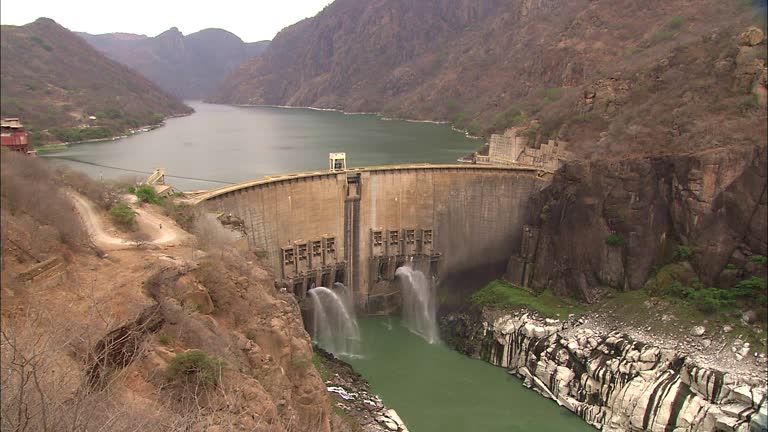
The Portuguese colonial government in Mozambique started building Cahora Bassa dam in the 70s. This was to export hydroelectricity, mostly to apartheid South Africa. It was financed through the sale of cheap electricity to apartheid South Africa in exchange for South African military support for Portuguese colonial rule.
The Portuguese framed the dam as part of their modernising project in Africa. It was a symbol of Portuguese and South African military/economic alliance for white minority rule on the continent. With this in mind, FRELIMO (Mozambique Liberation Front), the Mozambican resistance, repeatedly targeted and sabotaged the construction of the dam. The dam was completed six months before Mozambique’s independence.
Today Mozambique’s grid is in three distinct and disconnected systems. These grew in response to regional demand for energy export and are associated with extractive industry. SASOL controls the Pande Temane gas pipeline, and the draft IRP of 2023 included increased imports of Mozambican gas. Cahora Bassa produces surplus energy, but Mozambique must observe pre-independence agreements PPAs between Portugal and South Africa. According to this, South Africa imports 65% (1500 MW) directly from Cahora Bassa at below market price. Mozambique then re-imports energy from South Africa from the Komatipoort substation. The PPA also restricts Mozambique’s ability to increase its supply to meet national and international demand. This agreement is in force until 2029.
The discovery of one of the largest offshore gas reserves in the Rovuma basin in Cabo Delgado in 2010 and fossil fuel giants like TOTAL and Exxon Mobil’s subsequent extractive projects in the region triggered an ongoing series of human rights violations, insurgency attempts, displacement, and widespread violence. The Southern African Development Community and South African Defence Forces were deployed, essentially to protect the extractive interests of big corporations. Over a million people have been displaced from Cabo Delgado by these conflicts since the discovery of gas in the region.
Colonialism, extractive industries, unequal energy systems, and corporate interests shape who has resources, who is displaced, and who is forced to move. Instead of blaming migrants, we must confront the systems that create poverty, displacement and inequality. Solidarity, not scapegoating, is the answer.
This story is part of a series countering xenophobia and Afrophobia in South Africa. Each post explores how colonial histories, South Africa’s history and its present-day political and economic relationships with countries on the continent have shaped migration, energy systems, resource extraction and inequality. By understanding these shared histories, we can challenge the myths that blame migrants for crises they did not create. Migration is not the problem. Colonialism, exploitation, inequality and climate injustice are. Stay tuned for the next story as we continue to unpack the histories that connect us across Africa.