From Richards Bay to Gaza: Activists Demand End to SA Coal Exports to Israel
PRESS RELEASE – for immediate release May 18, 2026
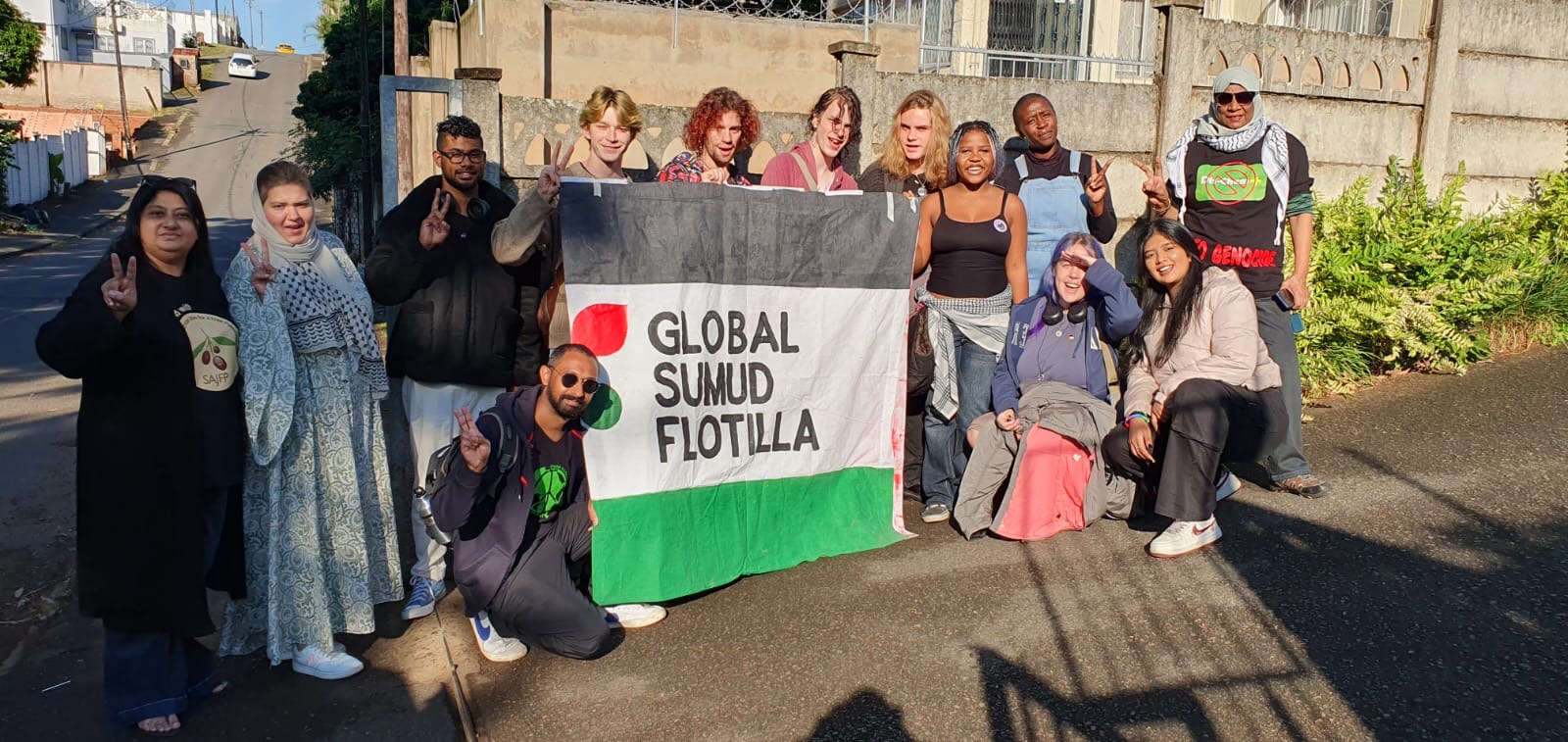
[Richards Bay, South Africa] — Members of the Climate Justice Coalition joined activists and formations from across South Africa in a mass mobilisation in Richards Bay from 15–17 May 2026. The event was in solidarity with comrades embarking on the Global Sumud Flotilla on journey to Gaza by land and sea to help break Israel’s illegal blockade and deliver urgent humanitarian aid to the Palestinian people.
The gathering was organised by the South Africa Boycott, Divestment and Sanctions Coalition and the Global Sumud Flotilla-South Africa. It took place in Richards Bay which serves as one of the ports through which South African coal is exported to fuel the state of Israel.
The programme began on Friday, 15 May, with a picket outside the coal terminal and an evening solidarity event marking the Nakba. The Nakba refers to the mass displacement and dispossession of Palestinians in 1948, commemorated annually by the United Nations and solidarity movements across the world.
On Saturday, approximately 100 activists marched in the rain toward the coal terminal to protest South Africa’s continued coal exports linked to Israel. Protesters were stopped by police before reaching the terminal. Some activists also entered the sea to publicly surveil activity at the port.
“Climate justice will not be realised if we do not reckon with how our struggles intersect,” said Tara Nair van Ryneveld, elected Deputy Secretary of the Coalition.
“Israel’s acceleration of the climate crisis through the ecocidal bombardment of Gaza, alongside the burning of South African coal to power its illegal settlements and fuel its war industry, contributes to more frequent and intense climate disasters — from the floods that hit KwaZulu-Natal, to the storm that devastated parts of the Western Cape this past week, to the floods experienced in Limpopo earlier this year.
“It also deepens existing inequality and instability, as municipalities already struggling to provide basic services are forced to navigate damaged infrastructure, while ordinary South Africans face unemployment, rising living costs, droughts, floods and extreme heat.”
The Coalition reiterates that Palestine is a climate justice issue.
The continued extraction, export and burning of fossil fuels, including coal exported through Richards Bay, is driving ecological destruction and climate breakdown. Militaries are among the world’s largest institutional consumers of fossil fuels, with military emissions estimated to account for 5.5% of global emissions, exceeding the emissions of the entire African continent. There is growing evidence linking war, militarisation and fossil fuel expansion to worsening climate impacts globally, while pointing to the role of multinational fossil fuel corporations in profiting from conflict and occupation.
The weekend’s mobilisation further drew attention to the links between colonialism, capitalism and climate collapse, arguing that systems built on extraction, dispossession and exploitation continue to shape both environmental destruction and human suffering globally from Palestine to Congo, Sudan and West Papua.
“There is no climate justice without confronting colonialism, imperialism and genocide,” Nair van Ryneveld said.
“There is no climate justice without human rights justice. We cannot expect systems built on exploitation of land, labour, ecosystems and people to deliver justice. South Africa cannot continue fueling these systems with its coal.
The Coalition echoes the sentiment of climate justice activists globally: There is no climate justice until Palestine is free.
###
CONTACT: Shaazia Ebrahim
Digital and Communications Specialist, Climate Justice Coalition
comms@climatejusticecoalition.org
+27833202255
About the Climate Justice Coalition: The Climate Justice Coalition is a coalition of South African trade unions, civil society, grassroots and community-based organisations working together on advancing a transformative climate justice agenda, which tackles the inequality, poverty and unemployment that pervades South Africa.