Africa Day: Climate Justice Coalition Secretariat Condemns Afrophobia, Affirming Migrant Justice as Central to Climate Justice
25 May 2026
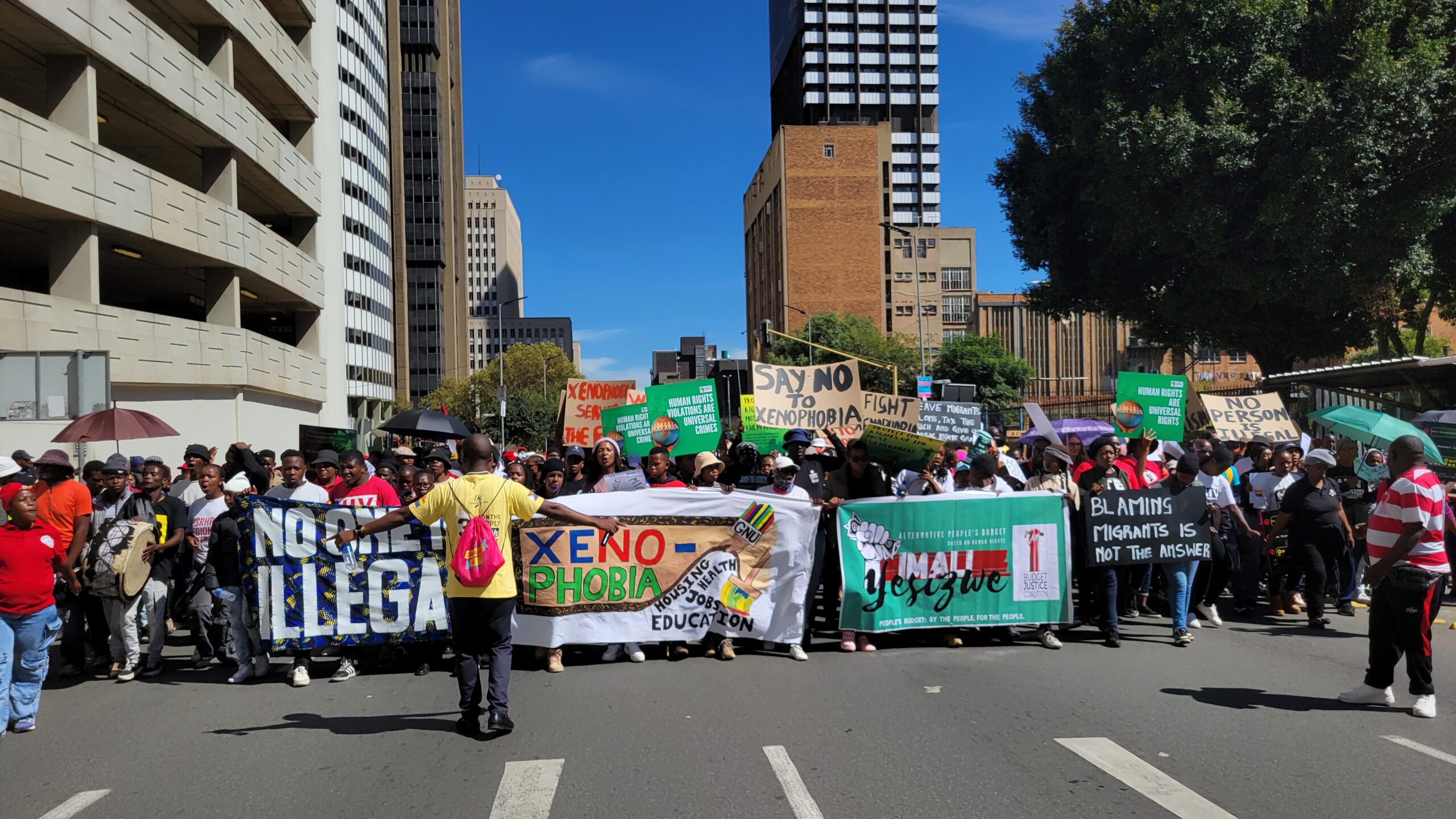
[South Africa] As we mark Africa Day on 25 May, the secretariat of the Climate Justice Coalition stands in unwavering solidarity with all African foreign nationals and migrant communities across the country. We vehemently condemn the recent wave of Afrophobic violence and rhetoric, including attacks targeting migrant people and children in Gauteng and KwaZulu-Natal.
Afrophobia is not an isolated social phenomenon. It is a political and economic symptom of deepening inequality, poverty, austerity, and systemic failure. It is a shameful betrayal of democratic freedom in South Africa which was won through solidarity and collaboration with our African neighbours. It is also a direct attack on the principles of Pan-African solidarity.
We affirm clearly: migrant justice is climate justice.
The climate crisis is already displacing millions across the African continent and globally. Unprecedented heat, prolonged droughts, floods, cyclones, and ecosystem collapse are reshaping where and how people can live. In the past few years in the Horn of Africa, severe multi-year droughts have devastated pastoral livelihoods. In the Sahel region, climate stress intersects with conflict and insecurity, forcing communities into displacement. Cyclones Idai, Kenneth and Freddy in Mozambique have compounded cycles of displacement and vulnerability. In Malawi and parts of Southern Africa, repeated flooding has destroyed homes, infrastructure, and agricultural systems that sustain rural life.
We also recognise the uneven responsibility for the climate crisis. South Africa, as one of the most industrialised and historically high-emitting economies on the continent, bears a disproportionate responsibility relative to many African countries that are far less responsible for global emissions. Yet, they are among the hardest hit by climate impacts. These inequalities shape real patterns of displacement, as climate impacts worsen across the region and people move within and across borders in search of safety, livelihoods, and dignity.
South Africa has and continues to play a neo-colonial role in regional political economy and extraction across the continent. Its capital and state-aligned interests are implicated in extractive regimes across the continent: from fossil fuel expansion off the coast of Mozambique in Cabo Delgado, to hydropower and mining supply chains in the Democratic Republic of Congo that serve multinational and domestic capital interests. South Africa is complicit in these systems of extraction which contribute to environmental destruction, destabilisation, violence conflict, and displacement – conditions that force people to move in search of better, safer living and working conditions.
Migration is both a historical and present reality shaped by environmental change, economic systems, colonial legacies, and ongoing extraction. It is not an anomaly in Africa. Most climate-related displacement occurs internally, but more and more, people move across borders seeking safety, dignity, and survival in the face of multiple intersecting crises.
As climate breakdown intensifies, more people will be forced to move. Besides being a consequence of the crisis, migration is also a form of adaptation, resilience, and survival. A just response to climate breakdown must uphold the right to stay and the right to move, safely and with dignity.
We reject narratives that frame migrants as the cause of South Africa’s ills. We see the pattern of rising waves of Afrophobia tied to election cycles. The political scapegoating of migrants in the year of local elections is a convenient means to distract struggling South Africans from how our political leadership have consistently failed to move progressively to address inequality, and systemic corruption, where the rich get richer and the poor get even poorer.
These narratives obscure the real drivers of inequality: entrenched unemployment, austerity policies, underfunded public services, and an economy still structured around extraction and accumulation for the few. Our public schools and healthcare systems are in crisis not because of migrants, but because of political choices that underfund them, prioritising profit over people. Our rate of unemployment is over 30 percent because of historically entrenched ways our economy works to extract resources and labour, that our democratically elected government never challenged or changed.
We therefore strongly condemn Operation Dudula, March and March and related formations. Climate Justice Coalition General Secretary Gabriel Klaasen:
“We condemn specifically the formations of Operation Dudula and March and March and those behind their funding and organisation, for preying on desperate South Africans’ frustrations with living conditions in this country, rather than working to build formations that actually address these through accountability, solidarity, collaboration and care. South Africa’s democratic project is rooted in internationalism, solidarity, and Pan-Africanism. We reject any attempt to erode this legacy through xenophobia or Afrophobic violence.”
We call on government, civil society, media, and communities to reject Afrophobia in all its forms, to hold political leaders accountable for inequality and service delivery failures, and to build a politics grounded in solidarity rather than scapegoating.
Climate justice is migrant justice. And migrant justice is Pan-African justice.
Featured image by @_campza on Instagram.
CONTACT: Shaazia Ebrahim
Digital and Communications Specialist, Climate Justice Coalition
comms@climatejusticecoalition.org
+27833202255
About the Climate Justice Coalition: The Climate Justice Coalition is a coalition of South African trade unions, civil society, grassroots and community-based organisations working together on advancing a transformative climate justice agenda, which tackles the inequality, poverty and unemployment that pervades South Africa.